· Skinlazia team · Guides · 9 min read
Malassezia Folliculitis on the Face: Spot Plan
Malassezia folliculitis on the face clusters on the forehead and brow line. See why the spot breaks out and which product ingredients to check first.
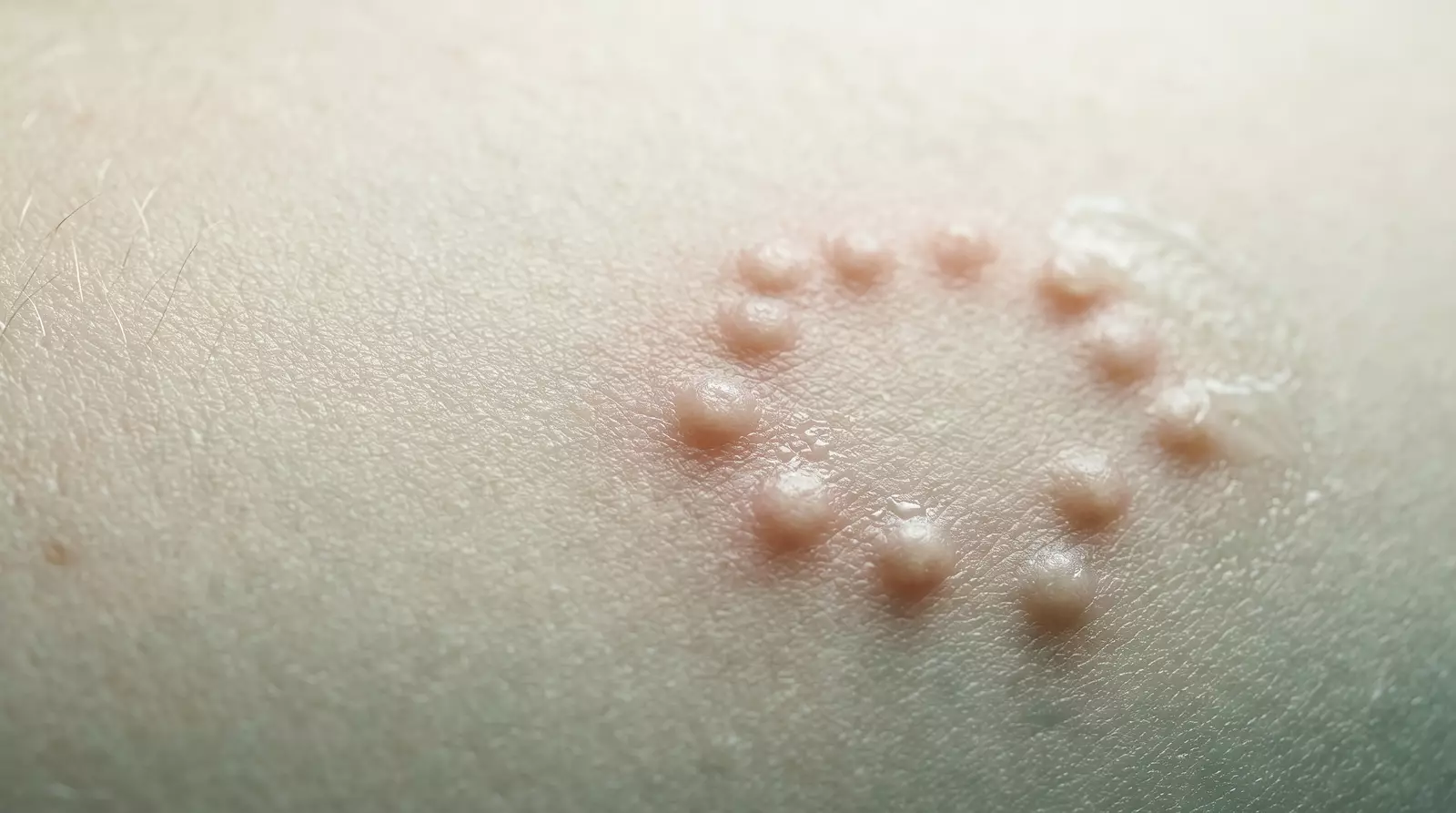
Fungal acne between the eyebrows is a yeast problem inside the hair follicle rather than the blocked-pore problem most spot products are built around, and that small patch of skin hands the yeast a few advantages at once. The medical name for the condition is malassezia folliculitis on the face, and the brow area is one of its favourite landing spots because it combines oil, dense hair follicles and trapped moisture. The bumps usually arrive as tiny, uniform, itchy papules that don’t clear with an ordinary acne routine, and a dermatologist can confirm whether Malassezia is involved (the 2025 mimicker review).
See our medical disclaimer for details.
The rest of this piece walks through why the face and the brow strip attract the yeast, what the bumps look like next to the usual acne suspects, and which ingredient classes our dataset flags before you spend on another product for the spot.
Why does malassezia folliculitis favour the face?
Malassezia folliculitis on the face follows the oil, because the yeast lives on normal skin and turns troublesome when the conditions around the follicle shift in its favour (the 2026 review). The review lists hot and humid weather, hair follicle occlusion and a weakened immune system among the risk factors, and it ties the condition to increased sebum production, lipase activity and inflammation. A 110-case series found the lesions most often on the forehead extending into the hairline, which is the strip of skin that runs straight through the brow area (the 2018 case series). The same series found that more than 75% of its patients had recently used antibiotics for acne, which fits the pattern of a yeast problem that takes over when the skin’s bacteria are cleared.
Brow hairs are terminal hairs with their own follicles, so each one has a small opening at the surface, and occlusion is one of the named risk factors in the 2026 review. When sweat, brow gel or a rich cream sits over that opening, the follicle has less room to breathe. Heat and humidity add to the effect, which helps explain why the bumps often flare in summer, after a workout or under a bike helmet (the 2020 review). The face also carries a high density of visible follicles, so it gives the yeast plenty of places to settle when the skin around them gets warm and oily.
What do the bumps between the eyebrows look like?
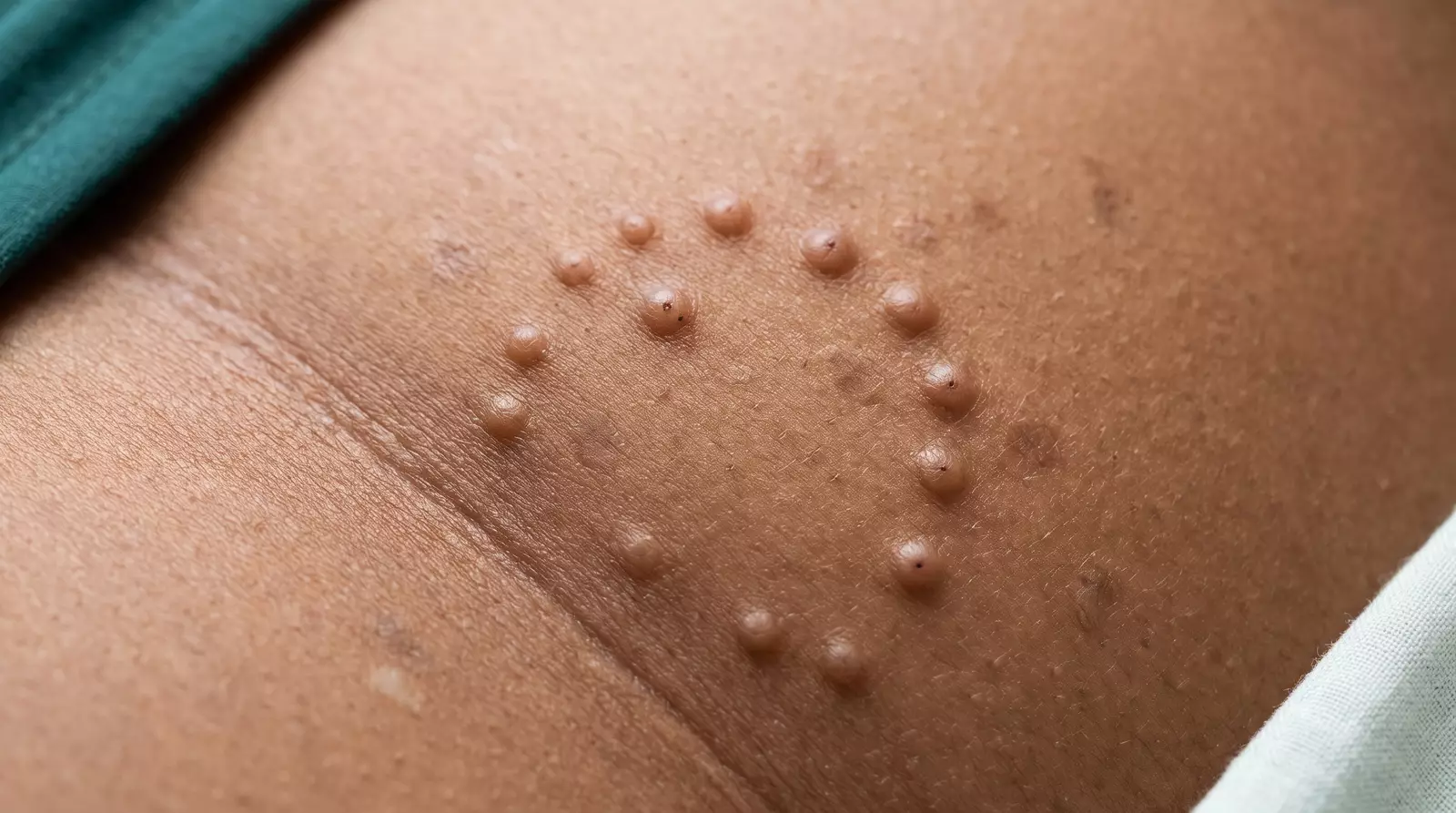
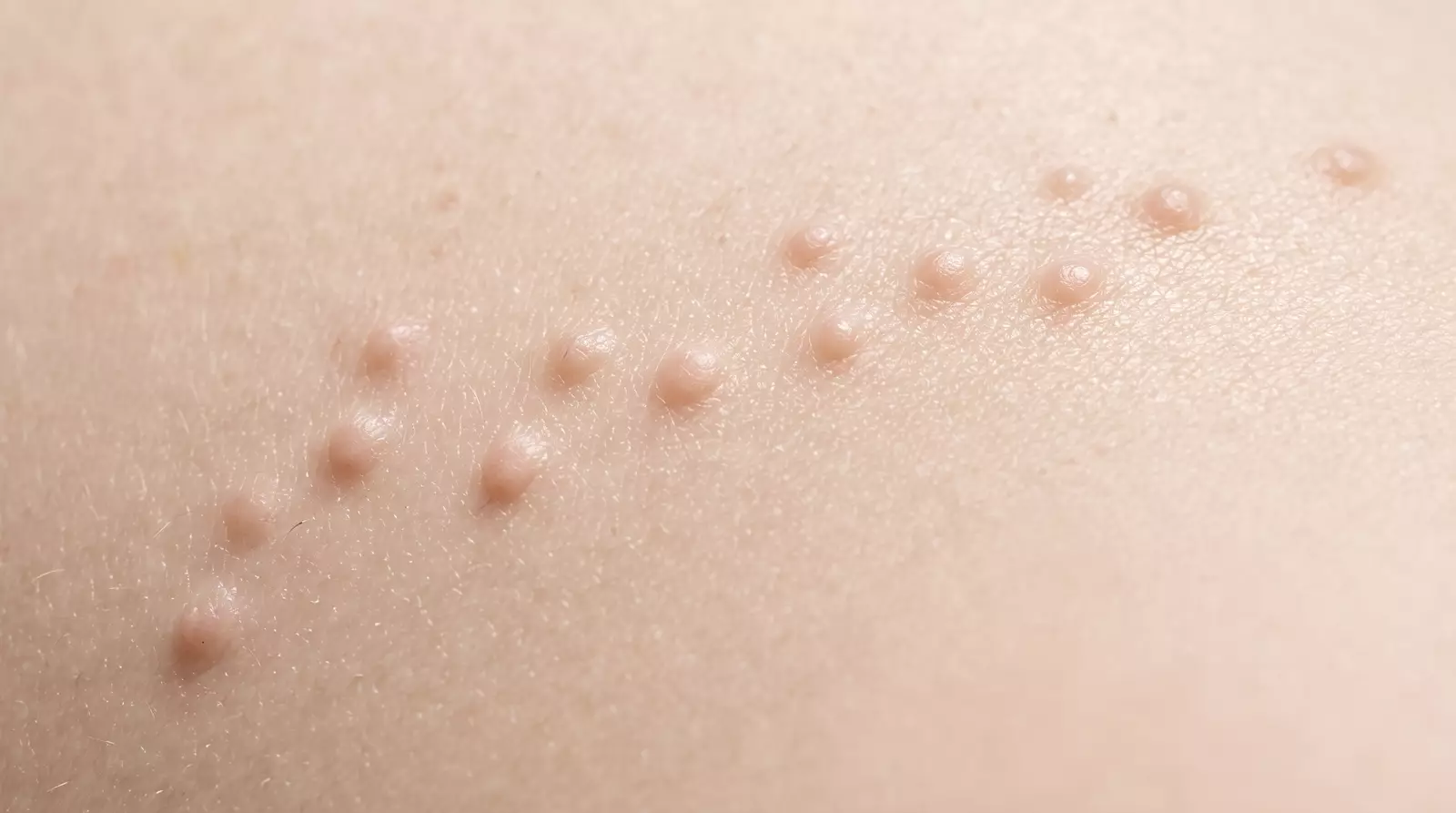
The classic picture is a cluster of small, uniform bumps that measure about one to two millimetres, often with a little redness around each one. In the 110-case series, the papules and pustules were monomorphic, which means they looked alike rather than varying from blackhead to cyst, and itching was recorded in 65% of the patients (the 2018 case series). The same series found the lesions on the forehead extending into the hairline, so a crop of bumps that starts between the brows and creeps up into the brow line fits the pattern. The 2025 review describes the same monomorphic, itchy papules and pustules and notes that they closely mimic ordinary acne (the 2025 mimicker review).
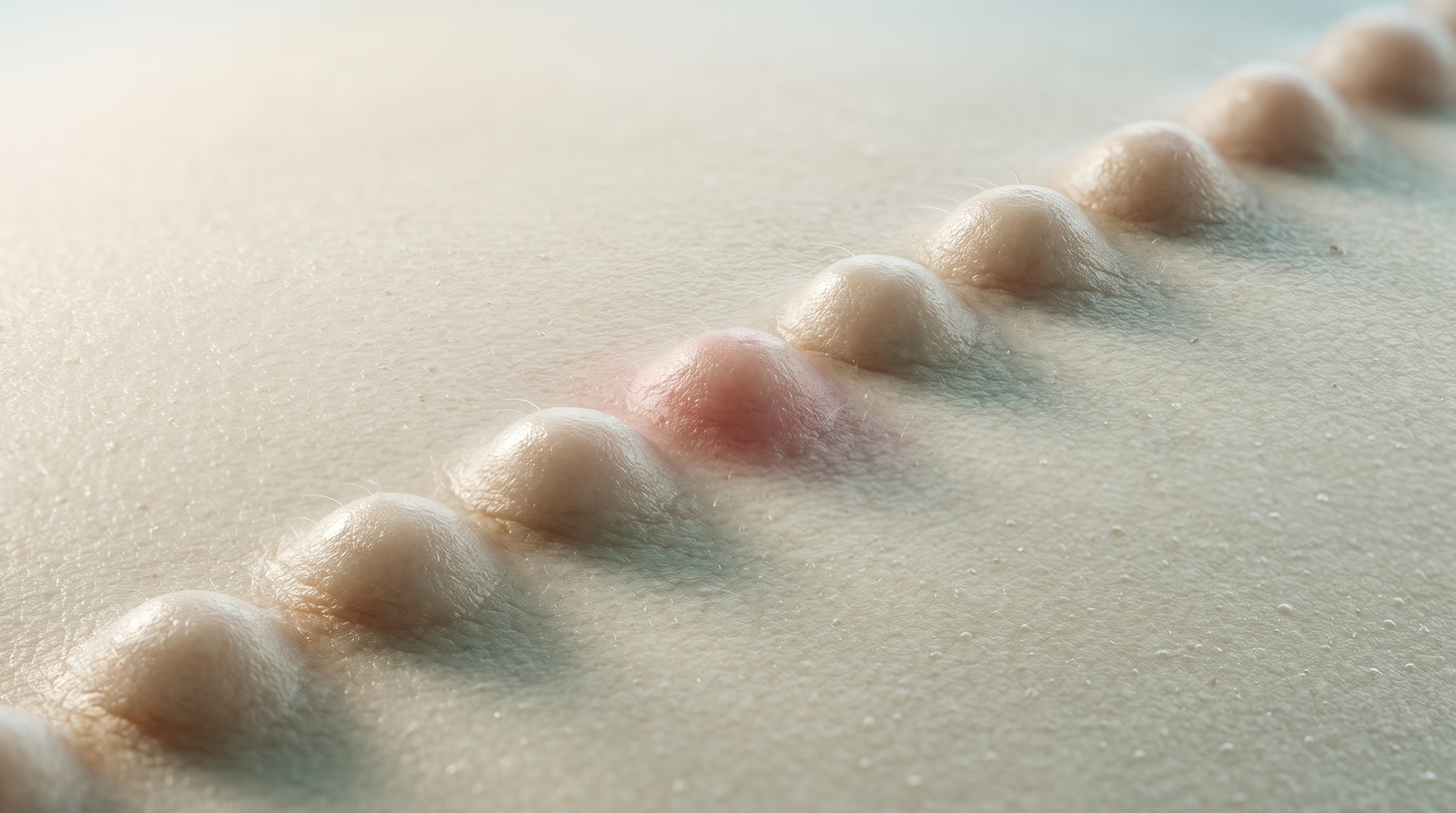
The differences show up in the details. Fungal bumps are usually many and nearly identical in size, while ordinary acne mixes blackheads, whiteheads and deeper spots. Fungal bumps often itch, while ordinary acne rarely does. A single tender bump beside a freshly tweezed hair is more likely an ingrown hair, and it usually settles as the hair grows out. Fungal bumps also tend to persist through a normal acne routine, while ordinary acne may improve with one.
A firm lump that stays put for weeks is a reason to see a dermatologist rather than a reason to buy another serum. The 2025 review also notes that several acneiform eruptions can mimic this condition, so the label people apply at home is often a guess until a clinician takes a look (the 2025 mimicker review).
Which ingredients should you check first?
Start with the products that stay on the spot longest, because brow gel, moisturizer and sunscreen sit there for hours. The Skinlazia dataset groups ingredients by what they do in a formula, and the pattern across those groups is easy to read.
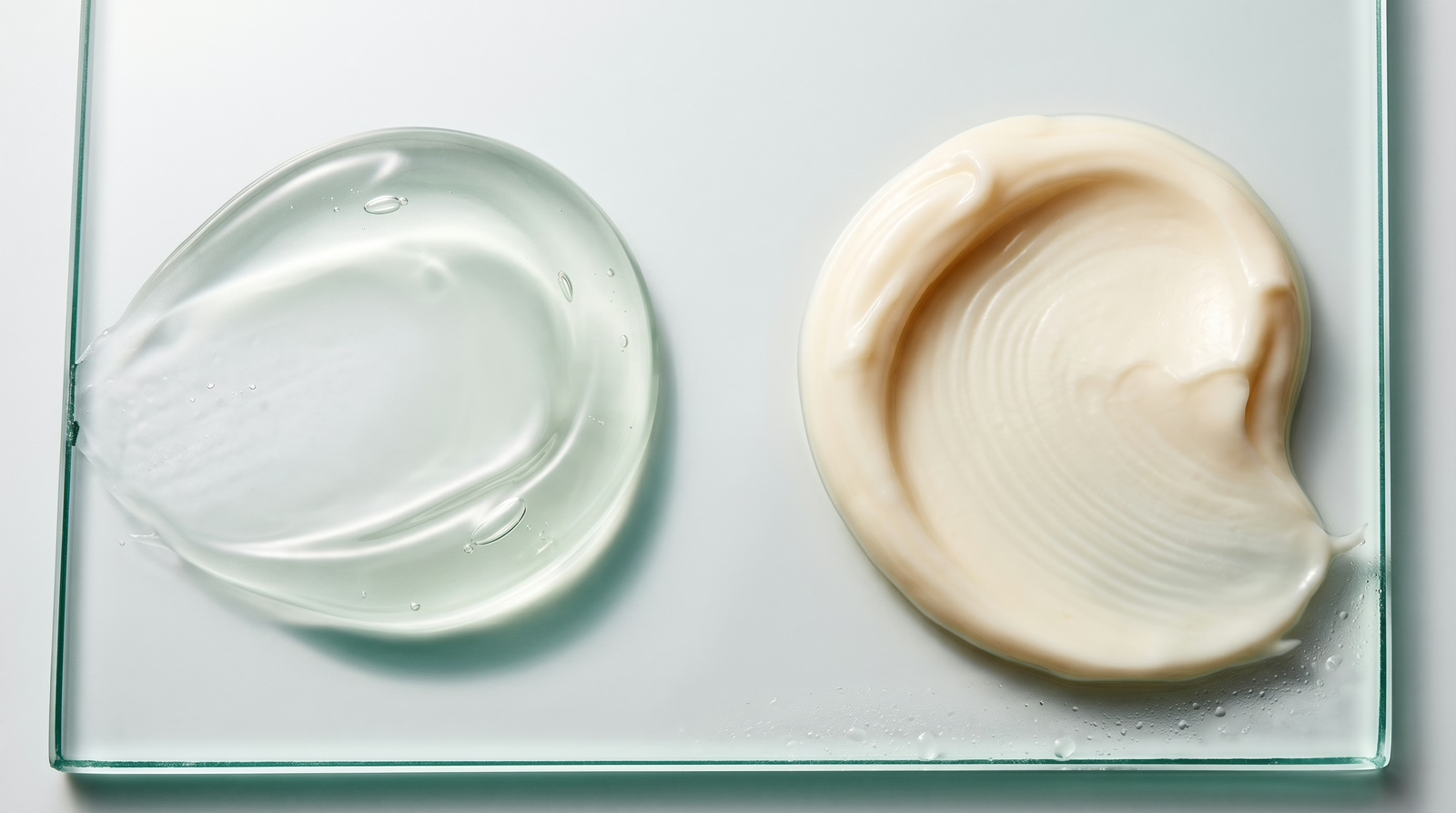 Oils and butters are the biggest source of yeast fuel, and the dataset flags 71 of its 73 oils. Fatty esters are close behind, with 93 of 100 flagged, and all 12 fatty alcohols carry a flag on limited evidence. Silicones and humectants sit on the other side, with none of the 42 silicones and none of the 44 humectants flagged.
| Ingredient class | What it does in a formula | Dataset flags |
|---|---|---|
| Oils and butters | Carry the mid-length fats this yeast can use | 71 of 73 |
| Fatty esters | Feel light while hiding a releasable fat | 93 of 100 |
| Fatty alcohols | Emulsify and thicken a cream | 12 of 12, limited evidence |
| Silicones | Smooth the finish without a fat | 0 of 42 |
| Humectants | Hold moisture without a fat | 0 of 44 |
The individual names follow the same logic. Coconut oil and argan oil are flagged as may trigger, and isopropyl myristate is flagged because the yeast’s enzymes free the myristic fat inside the ester. The waxy emulsifiers carry a lighter evidence label: cetyl alcohol, stearyl alcohol and cetearyl alcohol may trigger, and the dataset calls that limited evidence rather than proof. On the clear side, squalane carries no known trigger because it is the saturated form, while caprylic/capric triglyceride carries no known trigger because its short fats fall below the range this yeast can take up.
The rest of the clear list is made of ingredients that offer the yeast no fat at all. Dimethicone carries no known trigger because it is a silicone polymer, and glycerin, hyaluronic acid and niacinamide carry no known trigger because they are humectants or small actives with no fatty chain. A short-chain oil such as caprylic/capric triglyceride acts as a useful stand-in for the rich oils you are trying to avoid, and it keeps a gel moisturizer from turning into a heavy cream.
Do brow products and makeup matter more than skincare here?
Brow products matter because they land on the exact spot, and their ingredient lists are often the least examined part of a routine. A brow gel, pomade or pencil sits inches from the follicles that the 110-case series found affected, and a tinted product can carry esters or oils that a light moisturizer avoids.
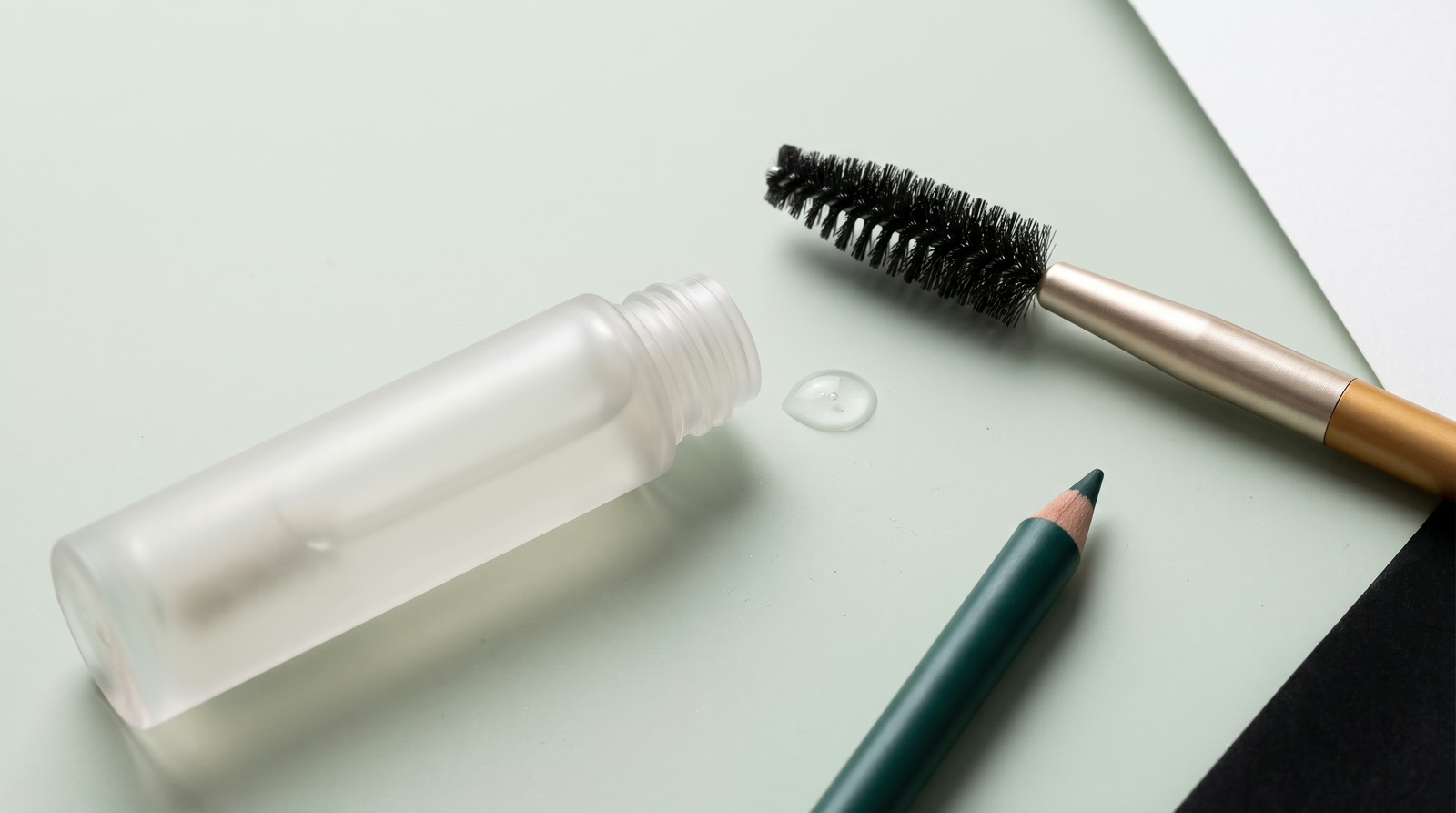 The same goes for foundation, concealer and the cushion of a sunscreen that you blend across the brow bone. Cleansing balms and makeup removers deserve a look as well, because an oil-based balm can leave a film right where the bumps start.
Oil-free on the front of a bottle doesn’t settle the question, since a formula can be oil-free and still list a flagged ester or a waxy emulsifier. The community term fungal-acne-safe makeup is a filter for lists that a checker has screened, and our malassezia safe makeup guide walks through the category one product at a time. You can also paste a product’s ingredient list into the checker and read the verdict for each name in seconds.
A short label check for the brow area:
- Read the first five ingredients, because they carry the largest share of the formula.
- Look for the flagged classes above, especially oils, esters and waxy emulsifiers.
- Check the full list rather than the front label, since oil-free and fragrance-free are different claims.
- Recheck when the brand changes the formula, because the INCI list can move under the same product name.
What helps the area settle down?
Keep the spot dry, stop adding heavy products to it, and let a dermatologist handle the antifungal decision. Picking at the bumps is the one habit worth dropping first, because squeezing adds trauma to skin that is already inflamed and can leave a mark that outlasts the bump. A light gel moisturizer (moisturizer category) and a thin sunscreen (sunscreen category) cover the basics without sealing the area under a heavy film, and a gentle cleanser (cleanser category) is enough for most routines. If you sweat, rinse and dry the brow area rather than letting moisture sit there, and change a sweaty headband or hat before you wear it again.
A dermatologist may prescribe antifungal treatment for a confirmed case, and the 2023 position statement sets out how that decision gets made (the 2023 position statement). The 2025 review adds a practical note, because it finds that antifungal treatment works well while bumps can return afterwards, which is why a maintenance plan and a follow-up matter more than a single product swap.
The catalog’s antifungal category collects the products the dataset marks as known to help, and each card shows the ingredients that were checked. Keep the expectation realistic, because an ingredient list can remove fuel without changing the yeast itself, and the medical side belongs with a clinician.
When is it not fungal acne?
A single tender bump near a tweezed hair is more likely an ingrown hair, and a firm lump that stays for weeks can be a cyst. The 2025 review notes that several acneiform eruptions mimic Malassezia folliculitis, so the label people apply at home is often a guess. Diagnosis can be supported by dermoscopy, a KOH preparation or a Wood’s lamp, and a dermatologist can tell the difference during an exam (the 2025 mimicker review). If your bumps are mostly on the chin or around the mouth, the fungal acne and perioral dermatitis comparison walks through a common lookalike, and the broader small bumps on the face guide covers the other candidates.
If the bumps are widespread, painful or keep coming back after a sensible routine, book the appointment instead of adding a stronger acid. A confirmed diagnosis changes the plan, and it saves you from buying a shelf of products that were never aimed at the right target.
What to check before you buy another spot product
Before you spend on another serum, check the list you already own, because the answer between your eyebrows is often a product that is already in your routine. The pattern is consistent: oils, esters and waxy emulsifiers are the classes the dataset flags most often, and silicones, humectants and short-chain oils are the classes it clears. Start with the brow gel and the moisturizer, work through the ingredients to avoid list, and use the checker when a label is long. The methodology explains how each verdict gets made, and the app puts the same check in your pocket for the next shelf you stand in front of.
Quick answers
Does malassezia folliculitis on the face itch?
It often does, since 65% of patients in a 110-case series reported itching, but the absence of itch doesn't rule it out.
Why do I only get bumps between my eyebrows?
That spot sits on the oily forehead, carries dense brow follicles and collects sweat and product, so it gives Malassezia the oil, occlusion and moisture it needs.
Should you squeeze the bumps between your eyebrows?
No, squeezing adds trauma to inflamed skin and can leave a mark, so keep your hands off and let a dermatologist look at stubborn bumps.
Can brow gel cause malassezia folliculitis on the face?
A brow gel doesn't create the yeast, but its list can carry flagged oils or esters that sit right on the spot, so screen the INCI before you reapply.
What is commonly mistaken for fungal acne between the eyebrows?
Ordinary acne, bacterial folliculitis, ingrown brow hairs and cysts can all look similar, and a dermatologist can confirm which one you have.