· Skinlazia team · Guides · 8 min read
Small Bumps on Face Not Acne: The Fungal Check
Small bumps on your face that aren't acne can be fungal acne. See how Malassezia folliculitis differs, which ingredients feed it, and how to read a label.
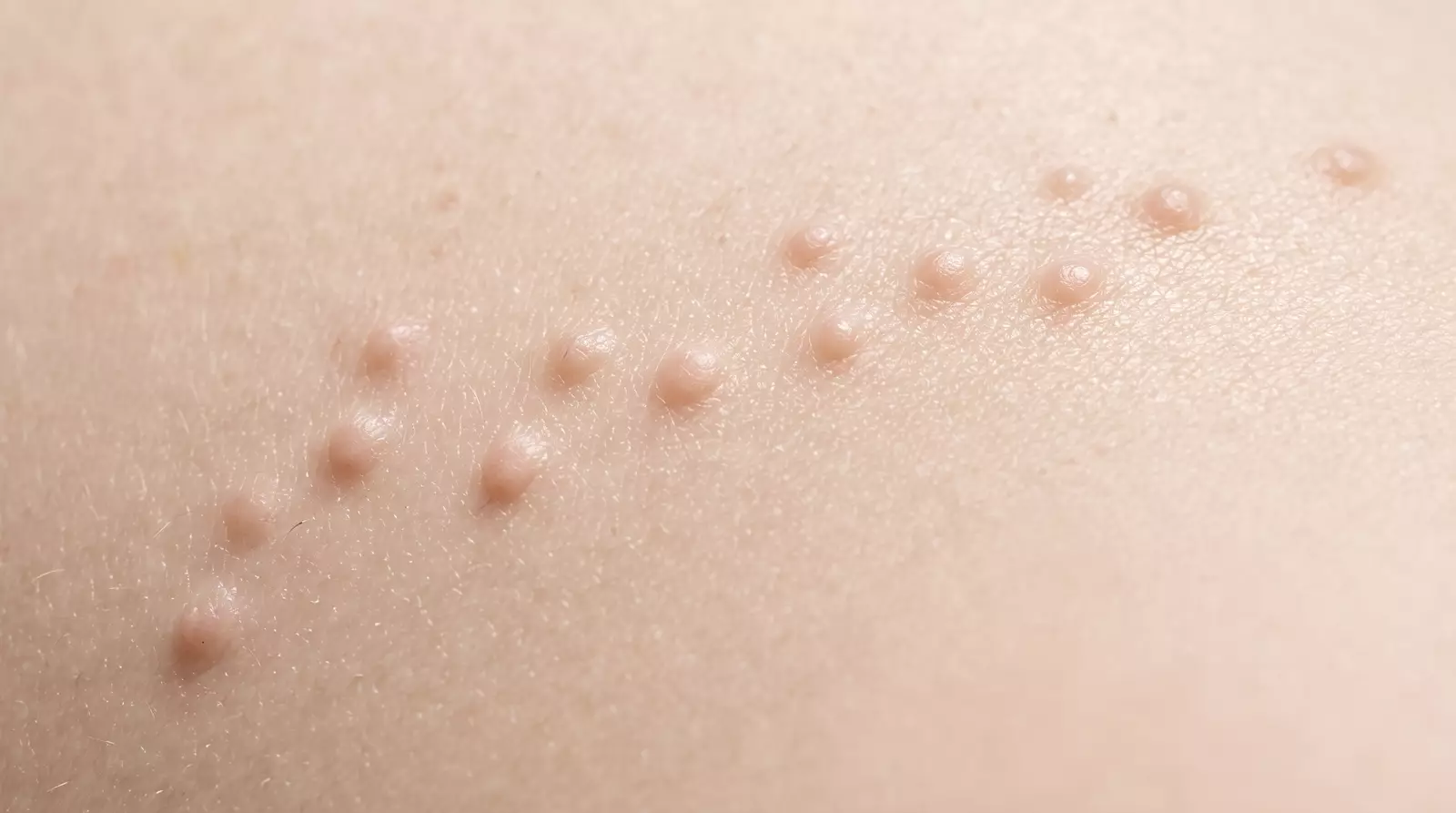
Small, itchy bumps that cluster on your forehead or hairline and shrug off your usual acne products may be fungal acne, the nickname for Malassezia folliculitis. The bumps don’t mean you have done something wrong with your routine, and they aren’t rare. What sets them apart is that the yeast behind them eats fat, so the ingredients in your cleanser or moisturizer matter far more than the strength of your acids.
See our medical disclaimer for details.
The phrase small bumps on face not acne covers a wide range of skin problems, and most of them have nothing to do with yeast. This guide stays with the one that has a trigger you can actually check on a label, because that is where a careful reader can make progress before an appointment.
What are the small bumps on my face if they aren’t acne?
Several common skin problems make small bumps that look like acne, and a mirror alone can’t sort them out. Milia, closed comedones, keratosis pilaris and folliculitis all produce bumps that get mistaken for pimples, and each has a different cause and a different set of triggers. This piece focuses on Malassezia folliculitis because the yeast behind it responds to specific fats, which means a product label can tell you something useful.
Dermatology reviews describe the condition as an acne look-alike that gets missed often, partly because the bumps sit in the same oily zones as ordinary acne (the 2026 review). A review of the published cases makes the same point, noting how consistently the eruption is confused with acne vulgaris at first glance (the 2025 review). That confusion is why people spend months on acne routines that never touch the actual cause.
What does fungal acne look and feel like?
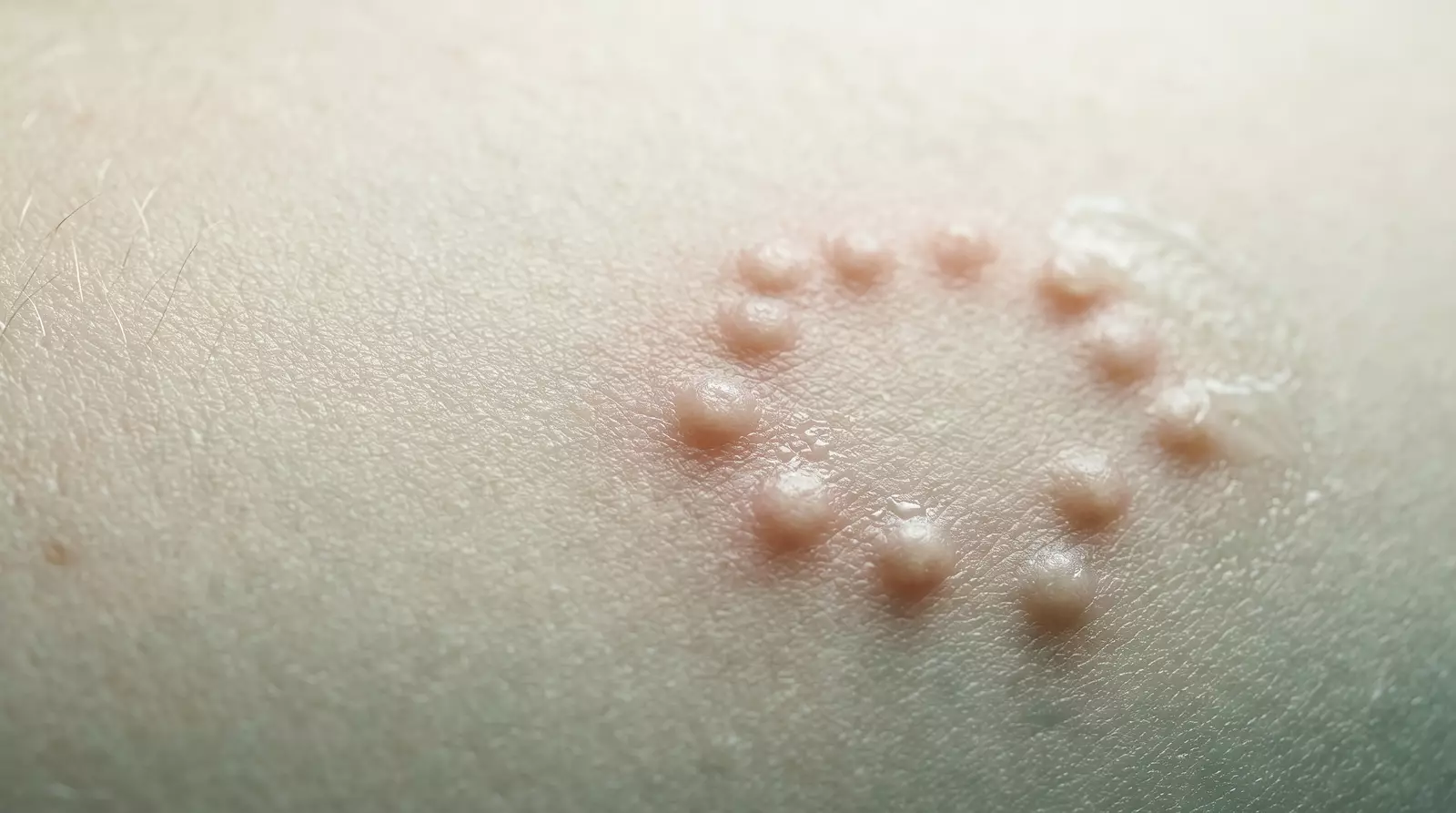
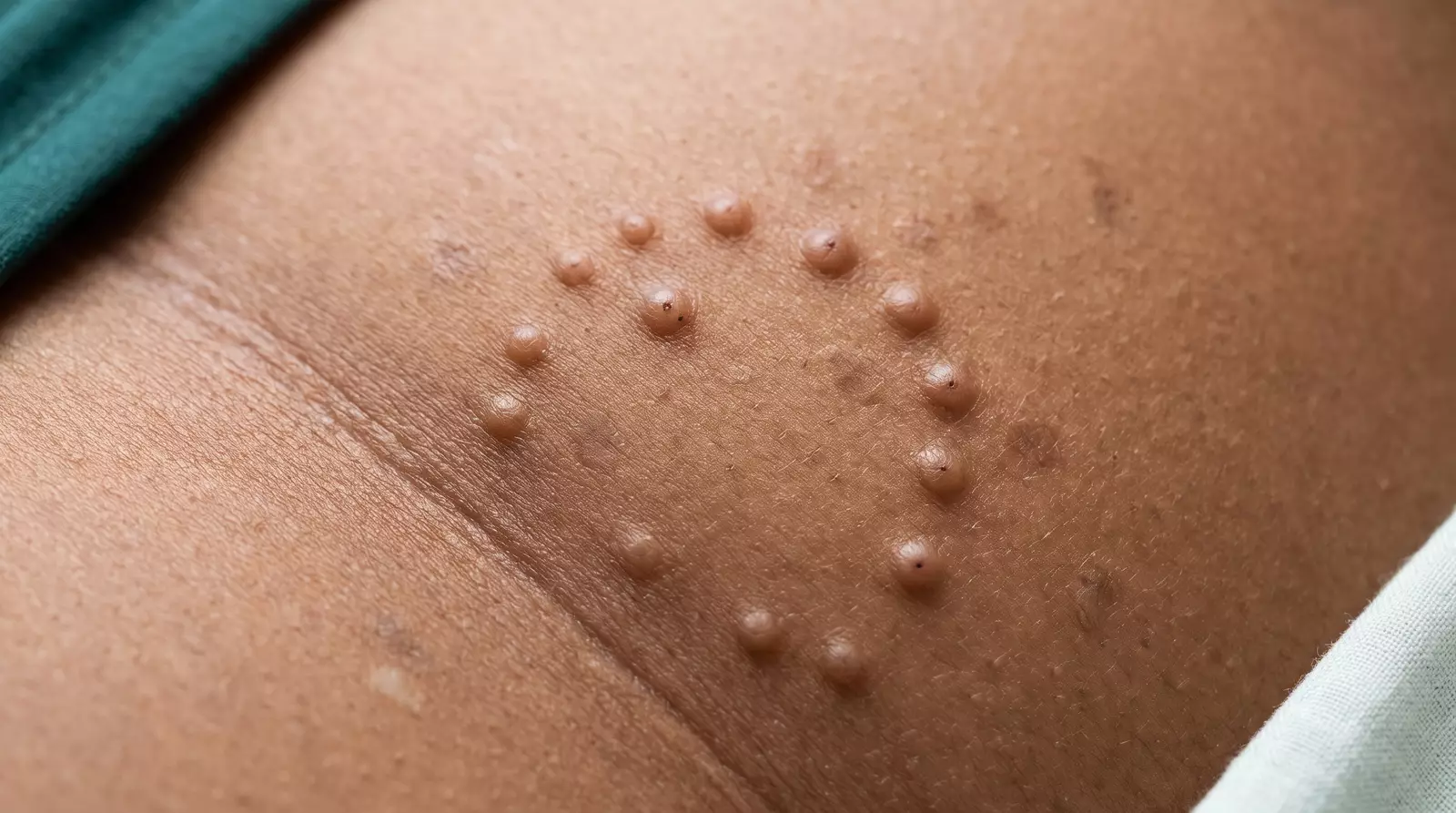
Fungal acne usually shows up as a cluster of small bumps that look alike, and the itch or prickly feeling is often the clue that separates it from a typical breakout. The bumps tend to sit in the oily parts of the face and upper body, and they can persist for weeks without forming a whitehead that behaves the way you expect. A large case series found this uniform, itchy pattern to be a common presentation (the 2018 case series).
| Feature | Fungal acne | Ordinary acne |
|---|---|---|
| Cause | Yeast overgrowth inside the hair follicle | Clogged pore with bacteria and oil |
| Shape | Small bumps of similar size in a cluster | A mix of blackheads, whiteheads and deeper spots |
| Feel | Itchy or prickly | Sore or tender |
| Usual spots | Forehead, hairline, upper cheeks, chest and upper back | Face, chest and back in any pattern |
| Response to standard acne products | Often little change | Often some improvement |
The location pattern matters because the yeast needs oil, and the forehead, hairline and upper back produce plenty of it. A breakout that stays in those zones and refuses to budge is worth a closer look, though the table can only point you toward a question for a dermatologist rather than give you an answer.
Why does Malassezia overgrow in the first place?
Malassezia is a yeast that normally lives on human skin, and it becomes a problem when its numbers climb rather than when it first arrives. The organism is part of the normal skin community on most adults, and the shift from quiet resident to flare depends on local conditions (the 2025 commensal review). Heat, sweat, tight clothing and heavy occlusive products all create the warm and damp setting the yeast prefers, and the clinical reviews list those factors among the common ones behind a flare (the 2026 review).
Recent antibiotic use gets mentioned for a different reason, because those drugs can lower the normal skin bacteria that would otherwise compete with the yeast (the 2026 review). People with a weakened immune system run a higher risk as well, and that link shows up clearly in the review of immunocompromised patients (the 2023 review). None of this means you can trace every flare to a single cause, and the honest position is that several factors usually stack up together.
Which ingredients feed Malassezia?
The yeast takes up fats within a rough carbon range of eleven to twenty-four, and it can free up more food by cutting triglycerides and esters apart with its own enzymes. That range is why some plant oils act as a feast while short-chain fats pass it by (the 2012 genus review). The enzyme side is documented too, with a lipase that breaks down fat and an esterase whose activity depends on which carbon chain the ester carries (the 2006 lipase study, the 1995 ester study).
Whole coconut oil and olive oil are the textbook examples, since they carry the lauric, myristic and oleic fats the yeast can absorb. Isopropyl myristate is an ester that its enzymes can snip apart, freeing its myristic fat, and Polysorbate 20 carries a laurate tail that lab work shows the yeast assimilating. The dataset gives each of these a may trigger verdict, and cetyl alcohol lands in the same group as a fat-like thickener with limited direct evidence behind it.
The word oil on a label doesn’t decide anything by itself, and a formula can call itself coconut-derived while resting on short fats the yeast can’t use. The exact ingredient name is what matters, because the same plant can supply a usable fat or a harmless one depending on how it was processed. That is also why a product marketed as clean can still feed the yeast while a more ordinary formula leaves it alone.
Which ingredients don’t feed it?
Plenty of common ingredients have no fat chain for the yeast to work with, and the dataset scores them as no known trigger. Glycerin is a small humectant that holds moisture, and squalane is the saturated form of a skin lipid with no double bonds for the yeast’s chemistry to attack. Dimethicone is a silicone polymer rather than a lipid at all, and caprylic/capric triglyceride is built from eight and ten carbon fats that sit below the usable range.
This is the practical reason to score names instead of whole categories. A moisturizer built around glycerin, squalane or dimethicone can feel rich without handing the yeast a meal, while a lighter-looking serum built on a plant oil can do the opposite. The full list of ingredients to avoid for fungal acne walks through the flagged side in more detail, and what fungal acne safe actually means explains the label logic in plain terms.
How do you check a product without guessing?
The check comes down to reading the complete ingredient list and scoring the exact names, then giving your skin a few weeks to respond. Start with the leave-on products, because a moisturizer or serum stays in contact with the skin far longer than a rinse-off cleanser. Then change one product at a time so that you can tell what actually helped.
- Find the full INCI list on the packaging or the brand’s own site rather than trusting the front label.
- Mark the fats first, since oils, fatty acids, fatty alcohols and fatty esters are the names most likely to feed the yeast.
- Run the list through the ingredient checker so each name gets the dataset verdict instead of your guess.
- Swap one product at a time and keep the rest of your routine steady for a few weeks.
The app does the same job on a shelf while you shop, and the methodology page explains how a name earns its verdict. If you want a starting point for a simpler routine, the cleansers with no known triggers and the moisturizers with no known triggers are both screened against the same dataset. A short list of products is easier to manage than a cabinet full of half-used bottles.
When should you see a dermatologist?
See a dermatologist if the bumps are painful, keep spreading, leave marks, or stay unchanged after several weeks of a gentler routine. A dermatologist can confirm what the bumps are, and may prescribe antifungal treatment when the cause turns out to be Malassezia (the 2023 position statement). That appointment is also the right move if you have a weakened immune system or a history of recurrent flares, since those cases need a closer look than a label check can provide.
The ingredient work here is meant to run alongside proper care rather than replace it. A checker can read a list and flag a fat, but it can’t see your skin, and it can’t tell you whether the bumps are fungal, bacterial or something else entirely. Keeping that limit in mind is what makes the screening useful instead of misleading.
What should you take away?
Small bumps on the face that aren’t acne deserve a different question than the one most routines ask. Instead of reaching for a stronger acid, look at where the bumps sit, whether they itch, and what fats your leave-on products carry. Malassezia folliculitis fits a recognizable pattern of uniform, itchy bumps in oily zones, and its food supply comes from both your skin and your shelf.
Sort the products one at a time, score the exact names, and take a stubborn or painful case as a reason to book an appointment. A cleaner starting point that removes the obvious fuel is the realistic goal while you get the right help, and it beats another round of stronger acids that never asked what the bumps actually were.
Quick answers
What causes small bumps on the face that aren't acne?
Several conditions can cause them, including milia, closed comedones, keratosis pilaris and folliculitis. Fungal acne is one type of folliculitis, driven by an overgrowth of Malassezia yeast inside the hair follicle.
Does fungal acne itch?
It often does. The itch or prickly feeling is one of the differences people notice first, since ordinary acne tends to feel sore rather than itchy. The pattern is common but not universal, so a lack of itch doesn't rule it out.
Is fungal acne contagious?
No. Malassezia is a normal resident of human skin and lives on most adults, so it isn't passed from person to person like an infection. It becomes a problem when its numbers rise on your own skin.
Can I keep using my regular acne products?
You can, though a stubborn breakout that doesn't respond is a sign to reassess. Harsh acids and heavy creams can irritate the skin without addressing the yeast, and a dermatologist can help you decide what to keep.
How do I know if a moisturizer is fungal acne safe?
Read the full ingredient list and check the exact fat names against a dataset. Oils, fatty acids, fatty alcohols and fatty esters are the usual flags, while glycerin, squalane and dimethicone carry no known trigger.
Should I stop using every oil on my face?
No. The carbon range matters more than the word oil, and short-chain fats such as caprylic/capric triglyceride sit below the range the yeast can absorb. The exact ingredient decides, not the category.